Published June 18, 2026 | By HDPTH Technical Editorial Team
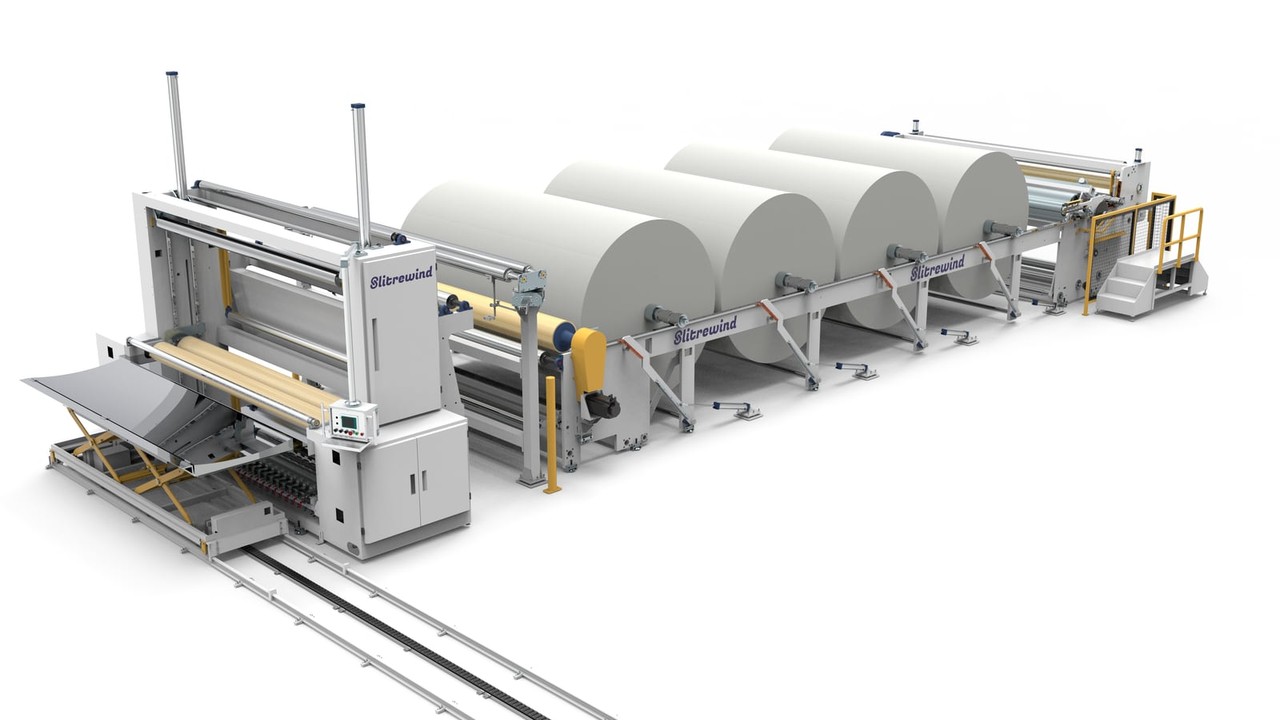
Many overseas buyers ask for a quote on a slitter rewinder before they have settled one of the most important configuration decisions: how the finished slit rolls should actually be wound. That gap leads to vague discussions about speed, knife type, or automation while the real roll-quality problem remains undefined.
The winding method matters because it changes how the machine builds roll hardness, how it supports slit edges, what finished diameters are practical, and how stable the line remains across different materials. It also changes what evidence you should ask for during supplier evaluation, factory testing, and installation planning.
For HDPTH projects, this is not a theoretical topic. The verified local product pages already show that slitting lines are configured by material, width, speed, knife system, winding method, and controls. The same pages confirm a broad working range: production speeds from 500 to 1200 m/min, unwinding diameters from 1200 to 2500 mm, rewinding diameters up to 1200 mm, effective winding widths from 1500 to 4500 mm, and materials such as nonwoven fabric, PE film, paper, hot air, spunlace, and spunbond. Once a line covers that much variation, the rewind concept cannot be left as an afterthought.
Why buyers should decide winding method early
Search results for slitter rewinders often mix together knife systems, web guiding, automation, and rewinding style. In practice, winding method is a separate commercial decision. It affects the shaft arrangement, contact-roll design, torque strategy, floor layout, unloading routine, and even how operators judge acceptable roll build during trial runs.
If your plant is already comparing suppliers on throughput alone, you can miss the more expensive problem: two machines with similar quoted speed can produce very different roll quality once material thickness variation, slip, tack, or diameter growth begins to matter. Buyers should therefore frame the rewinding discussion around the finished roll they need to ship, store, unwrap, and run in downstream equipment.
What center winding, surface winding, and center-surface winding really mean
TAPPI's winding reference and Valmet's winding-principle articles both describe the same foundation: wound-roll structure is influenced by tension, nip, and torque. Center winding drives the roll through the rewind shaft or core. Surface winding drives the roll by contact on the outside surface, typically through a drum. Center-surface winding combines both so web tension, nip, and torque can be managed more independently.
That description sounds simple, but for buyers it translates into a practical question: where should the machine apply the dominant winding force for your product? If the answer is wrong, the line may still run, but the finished rolls may become too soft, too hard, uneven, telescoped, blocked, or unstable in downstream use.
| Winding Concept | How the Roll Is Driven | Typical Buyer Use Case |
|---|---|---|
| Center winding | Torque is applied through the rewind shaft or core. | Softer rolls, smaller diameters, or materials that do not respond well to aggressive surface pressure. |
| Surface winding | The roll is driven through contact with an external drum or winding surface. | Harder rolls, larger diameters, and cases where external traction is more practical than driving torque through the wound layers. |
| Center-surface winding | Center drive and surface contact are used together. | Mixed product ranges, sensitive materials, or projects that need finer control of roll build across more conditions. |
When center winding is usually the better choice
Center winding is often the cleaner starting point when the buyer's priority is a softer roll structure or when the product is sensitive to too much external pressure. TAPPI notes that center winders are well suited to softer rolls and smaller diameters, and that they can be advantageous for tackier films or grades that do not tolerate hard surface-driven builds well.
From a buyer perspective, center winding deserves attention when the plant is fighting defects caused by over-hard rolls, when finished diameters are moderate, or when the downstream process is more sensitive to internal stress than to slight variation in external appearance. This can be relevant for selected nonwoven, film, or specialty flexible materials where the real target is not simply a straight roll, but a roll that unwinds calmly later.
The tradeoff is that center winding pushes torque through the wound layers. As diameter rises, that approach becomes harder to manage for some materials, and the operating window can narrow. If your product range expects large finished diameters or a wider hardness envelope, the apparent simplicity of center winding can become a limitation.
- You need softer finished rolls rather than the hardest possible package.
- Your normal finished diameters are moderate rather than very large.
- Material sensitivity makes excessive nip or surface pressure risky.
- You are prioritizing controlled unwind behavior on the next process, not just roll appearance at discharge.
When surface winding makes more sense
Surface winding shifts the main driving action to the outside of the roll. TAPPI's guidance highlights why this matters: the web tension is not created solely by torque moving through the wound layers, which can make surface winding attractive for hard rolls and larger diameters. In practice, buyers often look at surface winding when the line must build more substantial slit rolls, when contact traction is desirable, or when the process favors straightforward hard-roll formation.
That does not mean surface winding is automatically better. The same reference points out that some material families do not welcome air exclusion, high nip, or strongly surface-driven behavior. If the material has caliper variation, high slip, tack issues, or a tendency toward blocking or deformation, a basic surface concept may be too blunt unless the rest of the winding system is designed around those risks.
For buyers, the question is not whether a supplier can offer surface winding, but whether your product actually benefits from the harder, larger-roll bias that surface winding typically supports. If the answer is yes, then surface winding can reduce the practical limitations of a pure center-driven approach.
Why center-surface winding is often the premium answer
Center-surface winding exists because many real converting plants do not run one ideal material under one ideal condition all year. According to TAPPI and Valmet, this hybrid approach allows web tension, nip, and torque to be managed with more independence. That matters when the buyer wants a broader operating window, larger finished diameters, or better consistency across variable materials.
Commercially, this is often the right discussion for plants converting multiple grades, switching between width programs, or trying to avoid the compromise of choosing a winding concept that works perfectly for only one product family. It can also be the stronger path when your line will pair other productivity features such as automatic knife systems with a more demanding roll-quality target, because setup speed alone does not fix poor roll build.
The downside is cost and complexity. Center-surface winding typically asks more from controls, mechanical design, commissioning, and operator training. Buyers should specify it because the process needs it, not because it sounds more advanced on paper.
How to match winding method to material and defect risk
Material behavior should drive the decision. Nonwoven and flexible materials do not all react the same way to pressure, tension taper, or growing roll diameter. A plant that converts spunlace wipes stock, PE film, paper, and other flexible webs may discover that the real problem is not only slit edge quality but how the roll builds over time as width, slip, and caliper vary.
Montalvo's defect guide is useful here because it connects winding settings with visible outcomes. Telescoping, slack ends, poor starts, and edge-related defects are not just operator issues. They are signs that the winding method or winding recipe may not suit the product. Buyers should therefore enter supplier discussions with a defect history, not only a target speed.
That is also why a serious RFQ should include more than material name. Send GSM or thickness, parent-roll width and diameter, target speed, finished slit widths, finished roll diameter, core size, and examples of current roll problems. A supplier can only judge whether a high-speed slitting machine should be configured around center, surface, or center-surface winding if the actual defect and handling requirements are visible.
Unsure which rewinding method belongs in your RFQ?
Send your material data, slit-width range, finished-roll diameter, and the roll defects you want to eliminate. HDPTH can review whether center, surface, or center-surface winding is the more practical configuration path.
Request Configuration ReviewWhat verified HDPTH facts support this discussion
Only a limited set of machine facts should be claimed unless the local site or assets confirm them. The current HDPTH product pages verify that machine configuration is customized by project and that the line scope can be discussed around width, speed, knife system, winding method, and controls. They also verify the material range and parameter windows already mentioned above.
The certificates and patents page adds another useful point for supplier evaluation: HDPTH publicly lists patent or technology document titles connected with rewinding, unwinding, automatic knife adjustment, edge trim recovery, and non-stop unwinding. That does not justify claiming any one patented function as standard on every line. It does justify asking detailed technical questions during supplier review and checking how the supplier explains rewind-shaft options, contact-roll logic, and related automation scope.
For buyers who want more confidence before ordering, that discussion should be paired with review of the real workshop and factory evidence and the available certificates and patent documents, not only the quotation table.
Questions to ask before you approve the winding concept
Do not accept a generic answer like "this machine can do everything." Ask the supplier how the chosen winding method affects your exact finished-roll diameter, core size, slit-width mix, and target speed. Ask what trial evidence can be shown during factory acceptance. Ask what changes if your plant later adds a more difficult material or wider diameter range. Ask what operator adjustments remain manual and what the acceptable roll-quality limits are.
If the answer stays vague, the risk usually returns later as commissioning delay or roll-quality debate. A strong supplier should be able to tie the rewind concept directly to your material and to the commercial tradeoff between simplicity, flexibility, and product range.
- Which material families in our mix are the real decision drivers for the winding concept?
- What finished-roll diameter and hardness window is realistic with this rewind design?
- What roll defects should we monitor during factory testing to confirm the design choice?
- Does the machine use friction differential, torque winding, contact-roll pressure, or a hybrid arrangement?
- If we expand product range later, what rewind limitations appear first?
A practical selection rule for buyers
If your plant mainly needs softer, more forgiving rolls at moderate diameters, start the conversation with center winding. If your plant needs harder rolls or larger diameters and the material can tolerate stronger surface influence, surface winding may be the more economical answer. If your plant wants broader material flexibility, more control over roll build, or fewer compromises across multiple products, center-surface winding is often worth the added scope.
That rule will not replace sample testing, but it will keep the RFQ focused on the real engineering choice. It also prevents a common mistake in slitter rewinder purchasing: selecting a line for nominal speed and then trying to solve finished-roll quality after the machine concept is already fixed.
Buyer FAQs
What is the difference between center winding and surface winding?
Center winding drives the roll through the shaft or core, while surface winding drives it through contact on the outside of the roll. That difference changes how roll hardness builds and which material behaviors are easier to manage.
When should a buyer ask for center-surface winding?
Ask about center-surface winding when your product mix is broad, your quality window is tighter, or you need more independent control of tension, nip, and torque than a simpler winding concept can provide.
Does winding method affect slitting quality?
Yes, indirectly. The slitting section creates the cut, but the winding system determines whether the slit rolls remain stable, straight, and commercially usable after the cut is made.
What RFQ data matters most when discussing rewinding method?
Send material type, GSM or thickness, parent-roll width and diameter, speed target, slit-width plan, finished roll diameter, core size, and examples of current defects. Without that information the winding method is only guesswork.
Can one slitter rewinder handle more than one winding concept?
Sometimes, but buyers should ask exactly how the machine is equipped. Shaft design, torque control, contact-roll arrangement, and automation level determine whether the line is genuinely flexible or mainly optimized around one priority.
Sources
- Valmet: Winding principles part 1
- TAPPI: Challenges in Winding Flexible Packaging Film
- Montalvo: Roll Winding Defects Troubleshooting Guide
- Kampf: ConSlitter BlackLine
Planning a slitter rewinder for nonwoven, paper, or film converting?
Share your material, width range, finished-roll target, and current roll-quality problem. HDPTH can review the winding concept before quotation so the machine scope matches the process.
Send Your Inquiry