Published June 17, 2026 | By HDPTH Technical Editorial Team
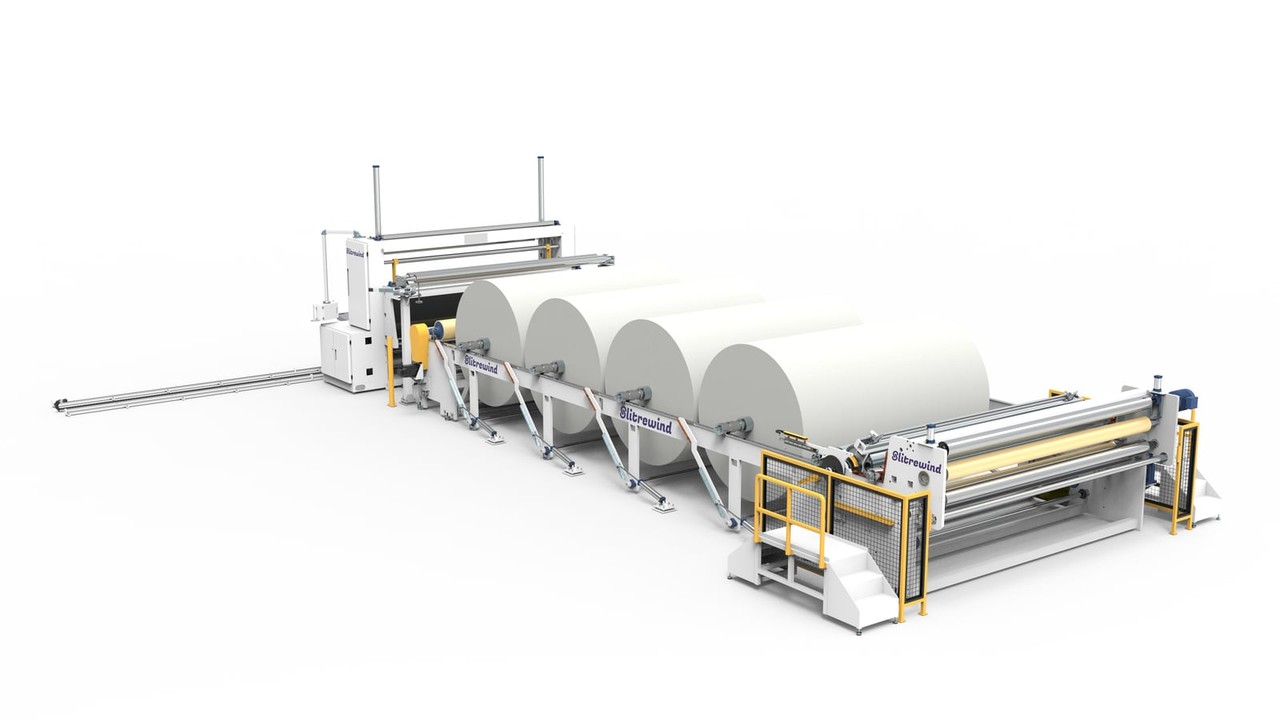
For many converters, the question is not whether automatic roll change is technically possible. It is whether the project actually benefits from it. A slitter rewinder can already be customized around material, width, speed, knife system, winding method, and controls, so the unwind section should be judged the same way: as a business decision tied to throughput, labor, and material risk, not as a fashionable option.
That distinction matters because a non-stop unwind changes more than a brochure feature list. It affects floor layout, web-path control, operator procedure, spare-parts planning, and the information the buyer must submit at RFQ stage. If your line will run nonwoven, paper, PE film, spunlace, spunbond, or similar roll materials at meaningful output rates, it is worth making this decision early rather than treating it as a late-stage accessory.
What non-stop unwinding actually means
In practical terms, non-stop unwinding means the parent roll can be replaced or transferred without forcing the whole converting line into a normal production stop. Contiweb's June 11, 2025 explainer on zero-speed splicing describes a common principle: a temporary web buffer is built, the expiring reel is stopped, a fresh reel is joined, and the line continues drawing substrate during the change. The exact mechanism differs by design, but the commercial objective is consistent: keep the web moving while the roll change is handled in a controlled way.
For buyers, the most important point is that non-stop unwinding is not only about speed. It is also about process continuity. If an upstream or downstream process is sensitive to starts and stops, a conventional unwind may create more waste, more operator handling, or more unstable restarts than the bare cycle-time number suggests.
When the option is commercially justified
The best candidates are converters who change parent rolls often enough that the lost minutes accumulate into a real capacity constraint. This usually happens when the line runs high volume, long shifts, or multiple changeovers each day. It can also matter when the web path is difficult to restart cleanly, when rolls are heavy enough to make every manual change awkward, or when the plant is trying to reduce operator exposure around moving rolls and nip areas.
Elite Cameron's turret-winder guidance frames the value clearly: reducing downtime increases throughput because one winding or roll-handling action can happen while the machine keeps running. That principle applies to the unwind discussion as well. If your bottleneck is not the slitting section itself but the interruptions around parent-roll replacement, then a non-stop concept becomes a serious engineering discussion rather than an optional luxury.
- Frequent parent-roll changes interrupt line output more than the slitting or rewinding speed limit does.
- Restart waste after each stop is costly because edge quality, tension stability, or splice handling takes time to recover.
- Roll loading is labor-intensive or creates traffic conflicts with forklifts, hoists, or nearby operators.
- Production managers are planning capacity expansion and need to recover hidden downtime rather than only raise nominal line speed.
- The project already includes higher automation expectations, such as recipe consistency or repeatable setup across multiple SKU widths.
When buyers should probably stay with a simpler unwind
Not every plant benefits enough to justify the extra system scope. If your runs are short, your changeover count is low, or your operation already has comfortable slack between parent-roll changes, a normal stop may be perfectly acceptable. The same is true when the line is not a production bottleneck or when the products being converted do not justify additional splice management complexity.
There is also a floor-space question. A more advanced unwind concept can require additional approach space, buffer logic, handling procedure, and maintenance attention. Plants that are already constrained on access lanes, roll staging, or utility routing may discover that the more sensible investment is in layout discipline, knife setup efficiency, or tension control rather than automatic roll change.
What factory data matters before you ask for this option
HDPTH's verified product information shows that high-speed slitting machines can be configured around production speed from 500 to 1200 m/min, unwinding diameters from 1200 to 2500 mm, rewinding diameters to 1200 mm, effective winding widths from 1500 to 4500 mm, and materials including nonwoven fabric, PE film, paper, hot air, spunlace, and spunbond. Those values do not prove that every project should use non-stop unwinding, but they do show why buyers cannot evaluate the option in the abstract.
Your own process numbers determine whether it makes sense. A large parent roll changed occasionally is a different case from a narrower line with repeated roll turnover. Likewise, a plant that wants to run at the higher end of its target speed window should examine not only theoretical maximum speed but also how much productive time is lost every time an operator stops to replace the expiring roll.
| Buyer Data | Why It Matters for Non-Stop Unwinding |
|---|---|
| Material type and GSM or thickness | Determines splice behavior, web stability, and whether restart waste is likely to be expensive. |
| Parent-roll width and diameter | Affects roll-change frequency, handling risk, and unwind station layout. |
| Target line speed | Higher speed makes stopped minutes more expensive and may justify automation sooner. |
| Finished slit widths and SKU mix | Helps clarify whether the real constraint is roll change, knife setup, or both. |
| Floor space and utilities | Advanced unwind concepts must fit the plant, not only the machine drawing. |
| Labor arrangement and shift pattern | Shows whether reducing manual intervention has meaningful operating value. |
Why this topic belongs in RFQ, not after order confirmation
Buyers sometimes postpone the unwind discussion until the main line specification is already close to fixed. That creates avoidable rework. The unwind concept influences layout, controls, guarding, loading workflow, and operator training. It can also influence what evidence you want to see during factory testing or shipment review.
If your team is already comparing high-speed slitting machines and deciding whether to combine the line with more automation, it is better to define the changeover problem up front. The same applies if you are already evaluating setup efficiency through automatic knife systems. Fast knife positioning reduces width-change time, but it does not eliminate the production interruption caused by a parent-roll change. The two decisions are related but not interchangeable.
Need help deciding whether automatic roll change belongs in your RFQ?
Send your material data, current roll-change frequency, line speed target, and available floor layout. HDPTH can review whether a simpler unwind or a more automated concept is the more practical fit.
Request RFQ ReviewWhat HDPTH can verify today
It is important to separate verified local facts from broader industry theory. The current HDPTH product pages confirm slitting-machine parameter ranges, material scope, installed power of 35 to 65 kW, effective operating power of 25 to 55 kW, and compressed-air demand of 0.5 to 1 m3/hour on the automatic row knife slitting machine configuration. The certificates page also confirms that HDPTH publishes patent documents for unwinding-related technologies, including titles such as Online Non-Stop Unwinding Device with Automatic Roll Change, Dual-Station Non-Stop Unwinding Equipment, and Online Rapid Adaptive Surface Unwinding Device.
That does not mean every current project should be described as having those exact functions as standard. What it does mean is that unwinding and automatic roll-change concepts are legitimate topics to discuss with HDPTH at supplier-evaluation stage. Buyers who want more than a standard stop-and-load workflow should use that discussion to ask what level of automation is realistic for their material and output requirement, and what extra site preparation or factory testing they should plan.
If supplier verification matters in your process, the practical next step is to review both the patent and certificate evidence and the real factory workshop information before finalizing the inquiry package.
Safety and maintenance questions buyers should not skip
Automation reduces some manual interventions, but it does not reduce the need for disciplined safety design. OSHA's machine-guarding rule 1910.212 requires guarding for hazards such as point-of-operation areas, ingoing nip points, and rotating parts. On a roll-handling section, that means buyers should ask specific questions about how operators load new rolls, where guards are located, what access is permitted during normal production, and what areas must remain restricted during transfer or splice preparation.
Maintenance is equally important. OSHA 1910.147 states that servicing and maintenance work must address unexpected energization, startup, or release of stored energy. That matters for unwind modules because the buyer's maintenance team will eventually service brakes, shafts, sensors, or control elements. During RFQ review, ask not only how the machine runs, but how it is isolated safely for cleaning, knife access, adjustments, and repair.
- Review guarding around rotating shafts, roll surfaces, and web-transfer zones.
- Ask how operators load a new parent roll and what manual steps remain during normal changeover.
- Clarify lockout or tagout expectations for servicing sensors, brakes, and mechanical assemblies.
- Confirm whether additional aisle space is needed to keep loading and maintenance paths separate.
A practical buyer checklist before making the decision
Before you decide that non-stop unwinding is required, force the discussion through a few measurable questions. How many minutes are currently lost per parent-roll change? How many changes happen per shift? How much scrap appears after restart? Does your upstream or downstream process become unstable after every stop? Can your plant physically support the extra unwind scope without compromising access or maintenance? If those answers are vague, the project is not ready for a confident automation decision.
On the other hand, if the data shows repeated lost production time and your team already has a clear automation roadmap, then the right move is to specify the requirement directly in the inquiry. Include the acceptable splice concept, the target labor outcome, the available floor envelope, and the evidence you want to see during factory acceptance or shipment review.
Buyer FAQs
What is non-stop unwinding on a slitter rewinder?
It is an unwind arrangement that lets the web continue through a controlled roll-change sequence instead of stopping the whole line every time the parent roll expires. Depending on the design, this may use buffering, transfer logic, or automatic roll-change methods.
When is non-stop unwinding worth specifying?
It is usually worth discussing when changeovers happen often, downtime is expensive, labor exposure around roll loading is a concern, or the process is hard to stop and restart without creating waste.
Does every slitter rewinder need automatic roll change?
No. Some plants will get better value from a simpler unwind plus good knife setup, layout discipline, and tension control. The decision should be based on real downtime cost, not on preference alone.
What RFQ data should buyers send when asking about non-stop unwinding?
Send material type, GSM or thickness, parent-roll width and diameter, finished widths, target speed, acceptable splice method, labor arrangement, electrical standard, and floor-space limits. Without that data, the option cannot be evaluated properly.
What safety points matter most during automatic roll change evaluation?
Guarding at nip points and rotating parts, operator access during roll loading, and clear lockout or tagout procedures for servicing should all be reviewed. Automation can lower manual handling frequency, but it does not remove normal machine-safety responsibilities.
Sources
- Contiweb: How does non-stop unwinding work?
- Elite Cameron: Turreted Winders
- OSHA 1910.212: General requirements for all machines
- OSHA 1910.147: The control of hazardous energy (lockout/tagout)
Planning a new slitting project?
Share your material, parent-roll size, speed target, finished widths, and current roll-change problem. HDPTH can review whether a standard unwind or a non-stop unwinding concept is the better commercial fit.
Send Your Inquiry