Published August 5, 2026 | By HDPTH Technical Editorial Team
Introduction: the role of embossing in nonwoven converting
For plant managers and engineers evaluating nonwoven converting machinery, writing a comprehensive nonwoven embossing machine specification is a critical step in ensuring final product quality. Whether processing spunbond, spunlace, hot-air nonwoven or composite materials, the embossing section significantly influences the tactile, visual and performance characteristics of the finished roll.
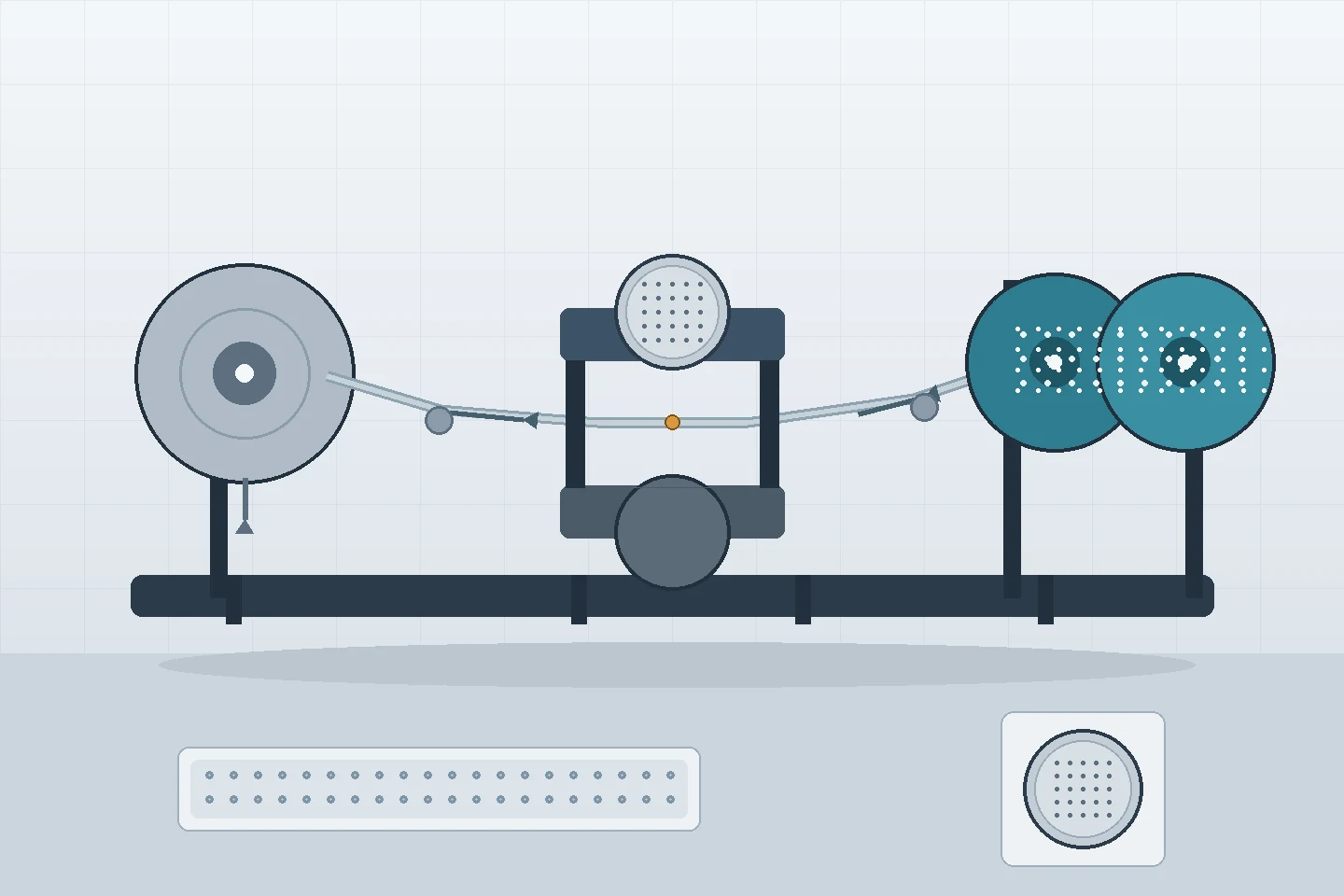
Fundamentally, an embossing roll is a precision-engraved cylinder that transfers a raised or recessed pattern into a substrate under controlled pressure and, in many applications, heat, through a nip with a mating roll. In the converting industry, the primary functions of this process include pattern transfer for brand differentiation, altering the surface texture, increasing material bulk, modifying absorbency and facilitating fiber bonding.
When discussing these impacts, it is essential to look at the physics of the substrate. For instance, peer-reviewed tissue research (such as Costa Vieira et al., 2023) reports that embossing is the converting operation with the most impact on final properties for tissue paper; it marks a pattern by pressure and can increase bulk and liquid absorption capacity, while potentially reducing softness and tensile strength. Nonwoven applications vary widely by material and bond pattern, so similar physical trade-offs must be evaluated for each product. Specifying an embossing section correctly ensures that the mechanical forces applied to the web enhance the product without degrading its structural integrity beyond acceptable limits.
Defining the embossing objective first
Before drafting a nonwoven embossing machine specification, overseas factory buyers must outline the primary objective of the embossing process. The mechanical configuration of the machine changes dramatically depending on whether the goal is decorative, functional or a combination of both.
Decorative embossing is often used for brand differentiation. This approach focuses on impressing a highly visible, aesthetically pleasing pattern — such as logos, floral designs or geometric shapes — onto the substrate. The priority here is visual clarity and pattern definition without necessarily altering the substrate's structural properties.
Functional embossing (bonding/bulk) alters the physical characteristics of the nonwoven web. This might involve thermal calendering to bond fibers together, creating loft or bulk in a wipes product, or modifying the liquid handling characteristics. Some suppliers also use alternative technologies such as ultrasonic embossing and bonding to achieve adhesive-free fiber integration.
Combination embossing is common in premium hygiene products and wipes, where the objective is to bond multiple layers of material while imparting a distinct brand pattern.
Once the primary objective is defined, engineers must consider the broader converting environment. Does the product require perforating, slitting or rewinding on the same line? Defining these integration points early prevents costly redesigns and ensures the web tension remains consistent as it passes from the unwinding stand, through the embossing nip and into the final rewinding or slitting phase.
Core specification items for an embossing section
A well-prepared RFQ checklist for an embossing section must detail the specific mechanical and thermal requirements needed to process your unique material. Below are the critical parameters that must be evaluated and communicated to the machinery manufacturer.
Embossing roll and mating roll arrangement
The arrangement of the embossing nip is the foundation of the process. The choice of roll materials dictates how the pattern is transferred and how the substrate reacts to the pressure.
| Configuration | Description | Best applications |
|---|---|---|
| Steel-to-rubber nip | A precision-engraved steel embossing roll presses against a compliant rubber mating roll. The rubber conforms to the substrate, pressing it into the engraved cavities of the steel roll. | Softer substrates such as tissue, nonwovens and lightweight films, and applications requiring gentle pattern transfer without severing fibers. |
| Matched steel-to-steel nip | Both rolls are steel, with a male engraved roll mating with a female engraved roll. This requires exceptionally tight tolerances and precise synchronization. | Rigid substrates, heavy nonwovens, and applications requiring deep, high-definition patterns or aggressive fiber bonding. |
Pattern geometry and engraving
The embossing pattern is not merely a picture; it is a three-dimensional mechanical tool. Your embossing roller specification should address the pattern geometry, including engraving depth, sidewall angle and release characteristics. A steeper sidewall angle may yield a crisper pattern but can cause the nonwoven material to stick to the roll, leading to web breaks. Surface treatments or specialized coatings on the embossing roll can be specified to improve release and enhance the durability of the roll under high-speed production conditions.
Pressure and temperature controls
Embossing relies heavily on the interplay of pressure and temperature.
Embossing pressure: the nip pressure determines how forcefully the pattern is pressed into the web. Buyers must specify the need for precise pressure adjustment mechanisms (often pneumatic or hydraulic) to ensure uniform pattern transfer across the entire working width.
Embossing temperature: heated embossing uses thermal energy to deform or bond synthetic fibers (such as PE film or spunbond materials), locking the pattern in place. Cold embossing relies primarily on pressure and the natural plasticity of the substrate. If heated embossing is required, the specification must address thermal uniformity across the roll face to prevent uneven bonding or material burning.
Working width, speed and web tension integration
The physical dimensions and speed of the line must align with the factory's production targets. The working width of the embossing section must accommodate the maximum parent roll width. Because the embossing nip acts as a primary driven point in the converting line, it heavily influences web tension. The machine specification must detail how tension is isolated or synchronized with upstream unwinding and downstream rewinding zones to prevent web stretching or wrinkling.
Integrating embossing and perforating on one line
For manufacturers producing tear-off roll products, specifying an embossing and perforating rewinding machine requires careful attention to process integration. When a wipes converting line combines embossing with perforating and rewinding, the process order and web handling become highly complex.
Typically, the web is embossed first to establish the texture and bulk, followed by perforation. Buyers should specify the required registration between the embossing pattern and the perforation line, particularly if the perforation must occur in a specific un-embossed lane or register mark.
Combining these processes also affects roll formation. Embossing changes the caliper (thickness) and flexibility of the material, which directly affects how tightly and evenly the roll can be wound. HDPTH nonwoven rewinding machine systems can be integrated with slitting, perforating and auxiliary equipment; the exact configuration depends on the material characteristics and finished roll requirements. Whether you are processing PE film, papermaking materials, spunlace, spunbond, paper or hot-air materials, the line must be engineered to handle the altered web behavior after embossing.
If the converting line also requires inline slitting, equipment capabilities must match the output. For example, manual data for the HDPTH automatic row knife slitting configuration on a high-speed slitting machine indicates production speeds of 500–1,200 m/min, a minimum slitting width of 45–65 mm and an effective winding width of 1,500–4,500 mm. This data applies strictly to the slitting machine's capabilities — not to embossing parameters — but it highlights the scale and speed requirements that an integrated embossing section must ultimately keep pace with or accommodate through accumulator systems.
Preparing your RFQ checklist
To receive an accurate quotation and feasibility assessment from a machinery manufacturer, buyers must provide concrete, detailed data. Vague inquiries lead to inaccurate proposals. When preparing to contact HDPTH or any other supplier, compile an RFQ checklist containing the following information:
- Material specifications: exact material type (for example spunlace, spunbond or composite), GSM (grams per square meter) and baseline thickness/caliper.
- Dimensional requirements: parent roll width and diameter, alongside finished roll width and target roll diameter.
- Throughput goals: required production speed target in m/min.
- End-use context: application industry (hygiene products, medical nonwovens, disposable wipes or industrial nonwovens). You can review typical applications to help categorize your request.
- Embossing objective: clearly state whether the goal is texture, bulk, thermal bonding or purely decorative.
- Pattern reference: supply a pattern drawing (CAD file) or, ideally, a physical sample of the desired finish.
- Operating constraints: any known embossing pressure or embossing temperature constraints based on previous material trials.
- System scope: preferred machine type (standalone embossing vs. integrated line) or the specific production problem you are trying to solve.
HDPTH has engineering background in these areas. While the company does not offer a standard catalog embossing model — because every application requires tailored engineering — its certificate and patent documents cover multiple nonwoven converting technologies. That engineering background is evidenced by patent documents such as the Suction Embossing Roller for Deep-Pattern Composite Design, the High-Temperature Embossing Machine for Rapid Setting, the Automatic Mold-Closing Punching and Embossing Machine, and Embossing Equipment for Flushable Products.
Share your embossing requirements before quotation
Are you planning to upgrade your wipes or hygiene converting line with a customized embossing section? Share your material specifications, parent and finished roll widths, speed requirements and embossing objectives with our engineering team today, so the recommended configuration can be evaluated against your production needs.
Send an RFQ to HDPTHSupplier evaluation and the factory acceptance test
Once a machine is built, the factory acceptance test (FAT) is the buyer's opportunity to verify that the nonwoven embossing machine specification has been met before the equipment ships. Buyers should physically attend the FAT or require comprehensive video documentation.
During the FAT, focus your checks on practical performance and operability:
- Verify pattern transfer: run your actual material samples through the machine at the target speed and check the output for crisp pattern definition, uniform depth, and the absence of material tearing or pinholing.
- Confirm control readouts: observe the HMI to verify that nip pressure and temperature controls are responsive, accurate and stable during continuous operation.
- Check pattern depth consistency: measure the embossed material across the entire working width (left, center and right) to ensure the pressure is balanced and the rolls are not deflecting.
- Observe changeover procedures: have the technicians demonstrate a width change or a pattern roll change, and note the time and complexity of the procedure because it will affect your factory's overall equipment effectiveness.
- Test auxiliary converting equipment: if the embossing section is part of a larger line, verify the integration points, web tension control and the functionality of edge trim recovery or defect inspection systems. HDPTH offers auxiliary converting equipment as part of its converting portfolio.
Do not accept generic acceptance numbers; clearly observe and record the machine's performance against your provided material samples.
Safety and maintenance context
A robust nonwoven embossing machine specification must also prioritize operator safety and maintainability. Embossing machines present significant mechanical hazards due to heavy rollers, high nip pressures and high operational speeds.
Safety configurations are ultimately a buyer's responsibility to specify according to local regulations. For example, in the United States, general machine guarding practice (such as OSHA 29 CFR 1910.212) requires guarding of nip points, point-of-operation hazards and rotating parts to protect operators and employees. Buyers should ensure their specification requires interlocked physical guards around the embossing nip that stop the machine if opened.
Maintenance procedures for an embossing line involve handling heavy steel rollers and working near high-temperature elements. Your specification and eventual factory protocols must accommodate strict lockout/tagout (LOTO) procedures during roll changes, cleaning and servicing to prevent the hazardous release of pneumatic, hydraulic or electrical energy.
Buyer FAQs
What should I specify when buying a nonwoven embossing machine?
You should specify your primary embossing objective (texture, bulk, or bonding), material type, GSM, parent and finished roll widths, and line speed. Additionally, detail the required roll arrangement (steel-to-rubber or steel-to-steel), pattern geometry, and any specific embossing pressure or temperature constraints based on your material's thermal properties.
What is the difference between steel-to-rubber and steel-to-steel embossing nips?
A steel-to-rubber nip uses a hard engraved roll against a compliant rubber roll, which is ideal for softer substrates like tissue and nonwovens to transfer patterns gently. A matched steel-to-steel nip uses interlocking male and female engraved rolls, providing deep, high-definition patterns and aggressive bonding for more rigid or heavy substrates.
Can embossing be combined with perforating and rewinding on one line?
Yes, a wipes converting line often integrates embossing, perforating, and rewinding. However, buyers must carefully specify the process order, the precise registration between the embossing pattern and perforation lines, and how the combined system will handle web tension changes to ensure tightly wound finished rolls.
What information does a manufacturer need to quote an embossing line?
Manufacturers need a detailed RFQ checklist including material type, GSM, parent and finished roll dimensions, target speed, application industry, and preferred machine type. Crucially, buyers must provide a physical material sample and a pattern drawing or physical reference to allow for an accurate engineering assessment.
What should I check during the factory acceptance test for an embossing section?
During the FAT, you should verify precise pattern transfer on your actual material samples, confirm the stability of nip pressure and temperature control readouts, and check for pattern depth consistency across the entire working width. You should also observe roll changeover procedures and confirm the presence of necessary safety guards around nip points.
Sources
- Precision Roll Solutions: Industrial Embossing Rolls
- Precision Roll Solutions: Guide to Embossing with Engraved Rolls
- New Era Converting: Coating, Laminating and Embossing Systems
- Costa Vieira, J., Fiadeiro, P. T., & Costa, A. P. (2023). Converting Operations Impact on Tissue Paper Product Properties – A Review. BioResources, 18(1), 2303–2326
- OSHA: 29 CFR 1910.212 General Requirements for All Machines
Start your custom machinery specification
Ready to integrate precise, reliable embossing into your nonwoven converting operations? Contact the HDPTH Technical Editorial and Engineering Team with your material samples and production data.
Send an RFQ today