
Published June 12, 2026 | By HDPTH Technical Editorial Team
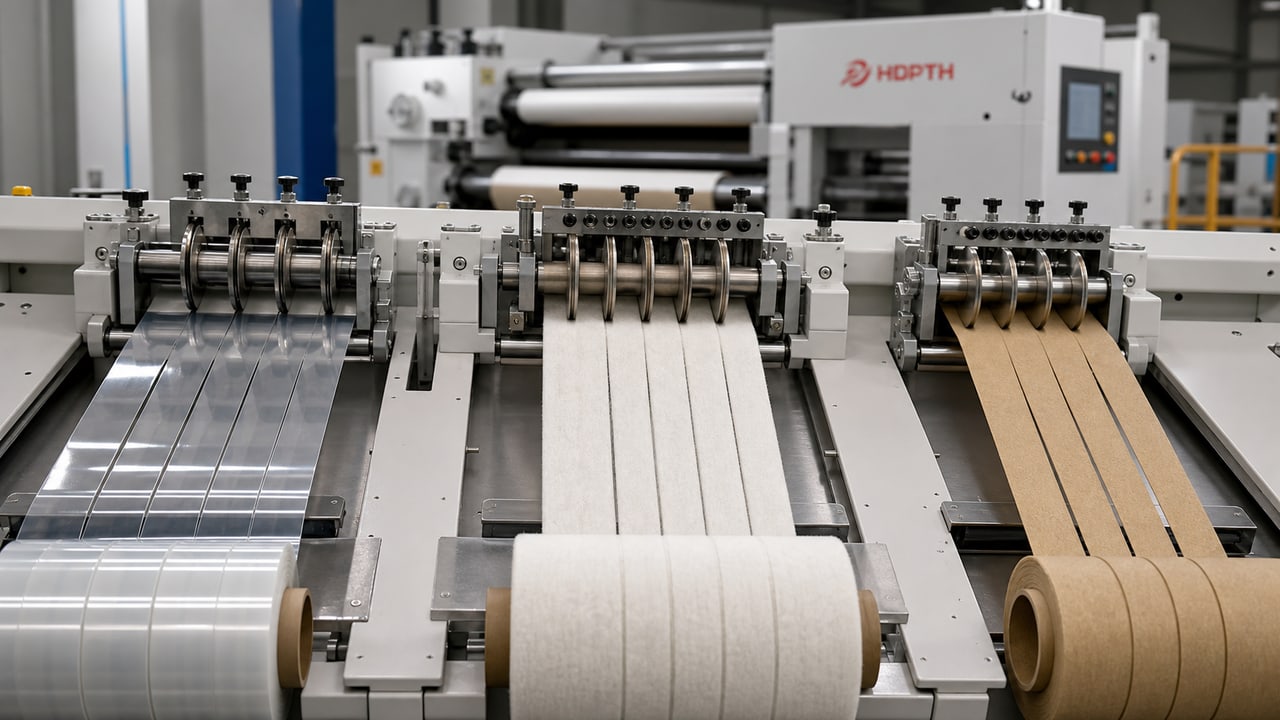
In B2B converting projects, slitting is not a minor add-on. It directly affects scrap, downstream runnability, roll appearance, operator time, and even whether an overseas buyer is satisfied after installation. A machine that looks acceptable on a quotation sheet can still become the wrong investment if the knife system does not fit the material mix. That is why experienced buyers review slitting method selection alongside width range, web tension control, and changeover planning instead of treating it as a late-stage accessory decision.
For HDPTH, this topic is closely tied to the machine scope buyers ask about most often: high-speed slitting machines, nonwoven rewinding machines, and automatic knife systems for faster setup and repeatable positioning. The best configuration depends on how those systems will be used in a real factory, not only on the theoretical cutting principle.
Why Slitting Method Selection Matters in Machine Procurement
Many procurement teams initially compare speed, width, and price. Those items matter, but they do not explain whether the finished roll will meet the application. Slitting method selection influences at least four practical outcomes.
- Edge quality and whether the slit edge stays stable in rewinding, packaging, or later converting steps
- Dust, lint, or edge deformation that may create quality complaints downstream
- Operator workload during changeovers, knife replacement, and width adjustment
- Total line uptime when the plant runs frequent SKU changes instead of long single-width campaigns
This is why a buyer should ask a supplier not only "what knife system is included" but also "why is this method suitable for my exact material and production pattern?" If the answer is vague, the RFQ is still incomplete.
Razor Slitting: Best When the Web Is Thin and the Setup Must Stay Simple
How it works
Razor slitting separates the web with a thin blade positioned either in an unsupported span or against a grooved support roll. The method is mechanically simple, which is one reason it remains common in film and lightweight-web applications.
Where it performs well
Razor slitting usually makes the most sense when the material is thin, uniform, and not heavily abrasive. Buyers often prefer it when they want a straightforward machine layout, lower tooling cost, and faster manual repositioning across multiple widths. When the web is suitable, razor slitting can be an efficient and economical choice.
Where buyers should be careful
The same simplicity that makes razor slitting attractive also limits its range. Blade wear can become a recurring operating issue when the substrate is thicker, rougher, or less consistent. Heat-sensitive films may also require careful testing because edge condition can deteriorate when the process is not matched correctly to speed and tension. Buyers should therefore treat razor slitting as a material-specific solution, not as the default answer for every flexible web.
A useful procurement question is whether the line will spend most of its time on a narrow set of film products or whether the plant expects future expansion into paper, nonwovens, laminates, or more demanding roll-quality requirements. If the second scenario is likely, the lowest initial cost can become the more expensive choice later.
Shear Slitting: Preferred When Edge Quality and Material Range Come First
How it works
Shear slitting uses upper and lower knives that cut with a scissor-like action. The method requires more mechanical precision than razor slitting, but it is widely selected for applications where the edge must be cleaner and more stable across a broader range of materials.
Why buyers specify it
For many paper, laminate, foil, and demanding flexible-material jobs, shear slitting gives procurement teams more confidence because it supports better edge control. When converters need consistent slit geometry, fewer edge defects, and stronger overall process stability, shear slitting is often the safer specification.
This is also where automation becomes commercially important. A technically capable shear arrangement can still waste time if every changeover depends on slow manual positioning. Buyers planning frequent width changes should review whether the supplier can integrate automatic knife positioning, recipe-based adjustment, or at least a layout that reduces setup effort between jobs.
What to review before approving it
Shear slitting is not only a cutting choice. It is also a setup and maintenance choice. Teams should ask how knife overlap, alignment, blade maintenance, and web tension will be controlled on the quoted machine. They should also ask what support the supplier provides during commissioning, because a good slitting method on paper still depends on correct field setup after installation.
Score Slitting: Often the Practical Choice for Nonwovens and Fibrous Materials
How it works
Score slitting, sometimes called crush slitting, separates the web by pressing a knife against an anvil. Instead of a scissor-like cut, the material is split by controlled pressure. In converting plants handling soft, fibrous, or uneven substrates, this can be a more practical solution than trying to force a shear arrangement onto a material family that does not respond well to it.
Where it fits
Score slitting is commonly evaluated when buyers process nonwoven materials, certain textiles, foam-like structures, or abrasive substrates where simple edge separation and reliable day-to-day operation matter more than the finest possible cut appearance. In these cases, buyers are usually balancing slit quality with changeover speed, maintenance burden, and line robustness.
Where caution is needed
Because score slitting relies on pressure, it is not automatically the right choice for delicate films or applications where the slit edge must stay especially fine and precise. Buyers should ask for sample-based evaluation rather than relying on a generic statement that one method can process everything. For mixed-material plants, the real issue is not whether score slitting works in general, but whether it works well enough for the exact product family being quoted.
Razor vs Shear vs Score Slitting Comparison Matrix
| Factor | Razor slitting | Shear slitting | Score slitting |
|---|---|---|---|
| Typical strength | Simple layout and low tooling cost | Cleaner edge and broader material adaptability | Practical for fibrous or pressure-tolerant materials |
| Typical limitation | Less suitable for thicker or abrasive webs | More setup-sensitive and mechanically demanding | Not ideal for delicate film edges |
| Changeover impact | Usually fast, especially in simple layouts | Can be slower unless automation is included | Often fast for width changes |
| Common buyer priority | Economy and simplicity | Edge quality and process control | Operational practicality on nonwovens and similar webs |
| Best evaluation method | Confirm blade wear and edge condition on actual film | Confirm setup stability, edge quality, and maintenance plan | Confirm edge condition and downstream roll behavior |
The Buyer Checklist: How to Choose the Right Method for Your Plant
The most useful way to compare slitting methods is to move from theory to plant data. Before final quotation review, buyers should document the following points for the supplier.
- Material family: nonwoven, PE film, paper, hot air, spunlace, spunbond, or mixed product program
- Parent-roll width, target slit widths, core sizes, and finished-roll diameter expectations
- Required speed range and whether quoted speed must be sustained continuously or only in ideal conditions
- Frequency of width changes and whether production is long-run or short-run
- Edge-quality tolerance, dust sensitivity, and downstream process requirements
- Maintenance capability on site, including knife replacement, sharpening coordination, and setup skill level
These details matter because the slitting method cannot be separated from the rest of the line. A buyer selecting the knife system is also indirectly selecting a changeover routine, a maintenance burden, and a quality-control routine.
Ready to Upgrade Your Converting Line?
If your current operation is losing time during width changes or struggling to keep slit quality stable across multiple materials, review whether a different knife arrangement or a more automated setup would solve the problem. HDPTH can discuss machine scope, changeover expectations, and factory integration based on your actual production data.
See the HDPTH factory and review current certificates before moving to quotation review.
Discuss Your Slitting ProjectNew Machine or Retrofit: Which Route Makes More Sense?
Not every buyer needs a completely new line. Some projects are better treated as a retrofit or upgrade discussion, especially when the core machine frame and winding concept remain usable. Others justify a new line because the plant wants higher speed, wider working width, a different material range, or stronger automation across unwinding, slitting, and rewinding.
HDPTH's current product pages show that automatic knife systems can be discussed as either a new line component or an upgrade requirement. That distinction is useful commercially. It allows the buyer to separate two decisions that are often mixed together: first, which slitting method is technically appropriate; second, whether the existing line can support it without compromising performance or maintenance access.
For overseas buyers, this usually means sending more than a simple material name. Photos of the current line, current knife arrangement, width plan, speed target, and the most common defect pattern can materially improve the supplier's recommendation before formal quotation.
What to Check Before FAT and Installation Preparation
Once the slitting method is selected, the evaluation should continue through factory acceptance testing and installation planning. The right pre-shipment questions are often more valuable than generic marketing promises.
- Ask which materials and slit-width combinations will be demonstrated during factory testing
- Confirm who is responsible for knife setup standards, operator training, and trial-result recording
- Review how web tension, trim handling, and roll build quality will be checked during test runs
- Clarify spare-parts planning for knives, holders, and other wear components before shipment
- Confirm power, air, and floor-space preparation before the machine leaves the supplier's site
These are not secondary details. They affect ramp-up speed after arrival and help prevent disputes when the machine reaches the buyer's plant.
How HDPTH Product Scope Fits This Decision
Verified local product information shows that HDPTH supports converting projects involving nonwoven fabric, PE film, paper, hot air, spunlace, and spunbond. The current product and manual-based pages also show reference capabilities such as production speeds of 500-1200 m/min, effective winding widths of 1500-4500 mm, minimum slitting widths of 45-65 mm, and full-servo PLC control on relevant configurations. Those figures are useful starting points for a technical discussion, but they still need to be matched to the real substrate and process target before order.
In practice, that means a serious buyer should not ask only for a price of a "slitting machine." The better RFQ asks for a configuration recommendation tied to material, width range, speed target, roll structure, and expected degree of automation. That approach gives the supplier enough information to recommend whether razor, shear, or score slitting is the correct foundation.
Get a Custom Slitting Consultation
Send your material type, parent-roll width, finished-width plan, target speed, and current process issue. HDPTH can review whether razor, shear, or score slitting is the better fit and whether the project is better handled as a new line or an upgrade.
Request a QuoteBuyer FAQs
Can a single machine perform razor, shear, and score slitting?
It can, but only if the machine is designed for interchangeable knife arrangements or future upgrades. Buyers should confirm the intended material mix, width range, and changeover pattern before assuming one configuration can cover every job.
Why is a shear slitting system creating excessive edge dust?
Excessive dust usually points to setup or maintenance issues such as worn knives, poor overlap, unstable web tension, or an unsuitable blade arrangement for the material.
How often should razor blades be replaced in a high-speed converting line?
There is no single replacement interval. Blade life depends on material abrasiveness, line speed, thickness, and quality requirements, so buyers should ask suppliers how blade wear will be monitored during trials.
What is the difference between burst razor slitting and grooved-roll razor slitting?
Burst razor slitting cuts the web in an unsupported span, while grooved-roll razor slitting supports the web on a grooved roll at the cut point. Grooved support generally improves stability for suitable materials.
Is score slitting suitable for delicate plastic films?
Usually not as a first choice. Because score slitting separates material by pressure against an anvil, delicate films often perform better with razor or shear slitting, depending on thickness and edge-quality targets.