Published June 26, 2026 | By HDPTH Technical Editorial Team
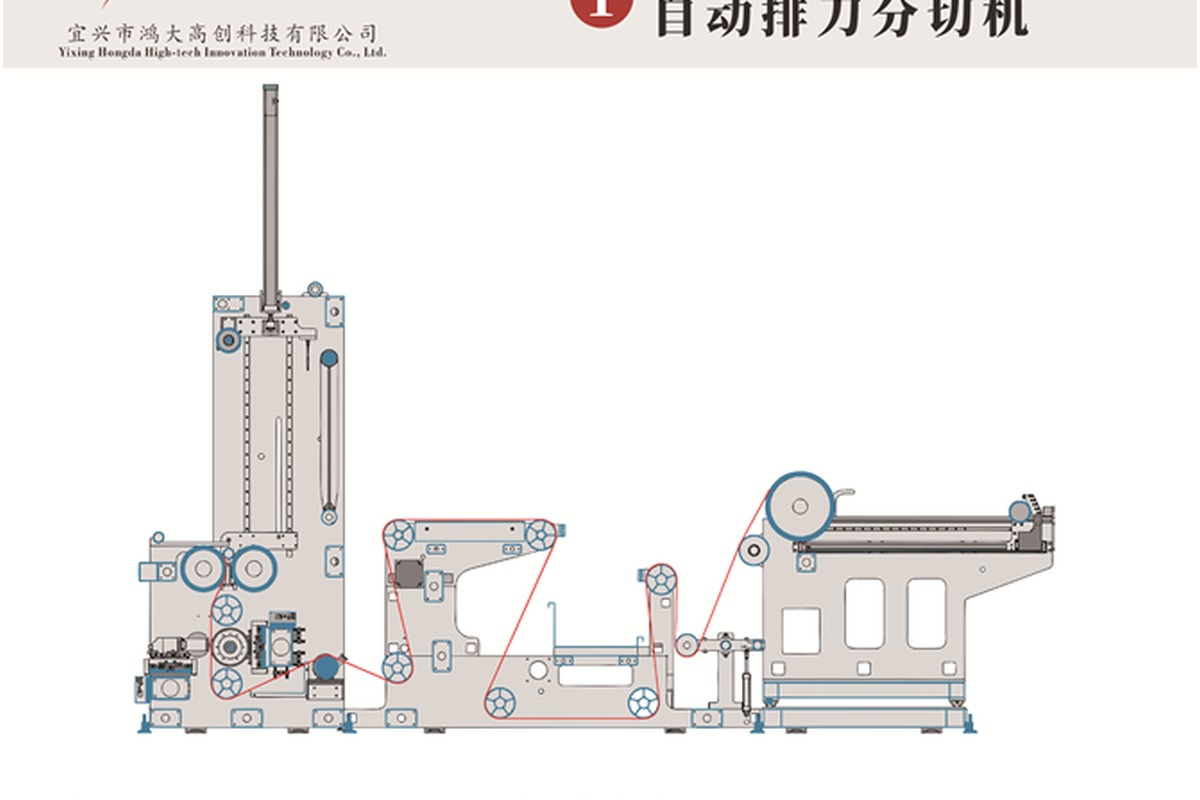
Many slitter rewinder specifications start with finished roll width, maximum speed and knife system. Those are essential, but the first production bottleneck often appears before the web reaches the knives. If the parent roll is difficult to load, slow to center, unsafe to handle or unstable during acceleration, the line will not deliver its expected output.
That is why overseas buyers should specify the unwind section carefully. The question is not simply whether a quotation says "shafted" or "shaftless." A useful specification explains the parent roll, the core, the loading method, the space around the machine and the roll-change rhythm of the factory.
This guide compares shafted and shaftless unwind choices for plant managers, production engineers and procurement teams buying slitter rewinders for nonwoven, paper, PE/PET film, hygiene, wipes and flexible roll-material converting.
What shafted unwind means
In a shafted unwind, a shaft passes through the parent roll core. The shaft supports the roll and connects the roll to the unwind stands, brakes, drive elements or safety chucks, depending on machine design. Before production, operators usually insert the shaft through the roll core, lift or position the roll, engage the shaft ends and then thread the web.
Shafted unwind remains common because it is mechanically straightforward and can be reliable when the roll size is manageable. It can also fit factories that already have shafts, lifting devices and operator procedures matched to their roll range.
The weakness is handling. A long shaft can be heavy, awkward and slow to insert through large rolls. If the roll is wide, heavy or frequently changed, the shaft itself becomes part of the production and safety calculation.
What shaftless unwind means
In a shaftless unwind, the machine supports the parent roll from the roll ends, typically through chucking arms or core chucks. Operators position the roll between the supports, and the machine clamps the core ends without inserting a full-length shaft through the roll. The design is often considered when parent rolls are large, changeovers are frequent or shaft handling is a practical burden.
Shaftless does not mean "no handling problem." The parent roll still has to be moved, aligned and secured. Core quality becomes important because the roll is gripped from the core ends. The factory still needs a safe loading path, enough floor space and a clear procedure for roll carts, hoists or cranes.
For many buyers, the value of shaftless unwind is not only speed. It may reduce manual shaft handling, simplify roll loading, and make large-roll operation more realistic for a multi-shift plant.
How to decide: parent roll data first
The unwind choice should start with the roll you actually buy or produce upstream. A proposal based on an average roll can fail when the plant receives the heaviest, widest or least consistent parent rolls in normal production.
| Buyer Data | Why It Changes the Unwind Choice | What to Send |
|---|---|---|
| Parent roll width | Wide rolls make shaft insertion, lifting and alignment harder | Minimum, normal and maximum roll width |
| Roll outside diameter | Larger rolls affect stand geometry, floor space and brake response | Maximum OD and common OD range |
| Roll weight | Heavy rolls increase handling risk and may favor shaftless loading | Maximum weight and typical weight by material |
| Core ID and condition | Both designs depend on the core, but shaftless chucking is especially sensitive to core-end condition | Core ID, core material, wall thickness and damage tolerance |
| Changeover frequency | Frequent roll changes magnify handling time and operator fatigue | Roll changes per shift and target downtime |
| Loading equipment | The machine must match the real factory handling method | Crane, hoist, roll cart, floor pickup or manual assist method |
| Web tension requirement | Unwind stability influences edge quality, guiding and finished roll quality | Material, basis weight or thickness, speed target and tension sensitivity |
When shafted unwind is a practical choice
Shafted unwind is often suitable when parent rolls are not extremely heavy, operators can insert and remove shafts safely, core quality is stable, and the plant does not lose excessive time during roll change. In those conditions, the simpler architecture may be easier to maintain and understand.
It can also be the right choice when the factory uses a limited range of roll sizes. If most parent rolls are similar and the upstream supplier provides consistent cores, a well-designed shafted unwind can give predictable support with less mechanical complexity.
Buyers should still avoid treating shafted unwind as a low-risk default. If the shaft is too heavy for normal handling, if the roll is loaded by improvised methods, or if shaft insertion damages the core, the decision may create hidden cost after installation.
When shaftless unwind deserves serious review
Shaftless unwind deserves attention when parent rolls are wide or heavy enough that shaft insertion becomes a bottleneck. It is also worth discussing when roll changes are frequent, when the plant wants a more controlled loading workflow, or when operator ergonomics are a major project requirement.
Large nonwoven, paper and film rolls can be difficult to manage with a long shaft. Shaftless systems offered by converting-equipment suppliers are often presented around easier roll loading, reduced shaft handling and faster changeover. Those benefits are real only when the machine design, roll cart or crane path, chucking range and core quality match the buyer's plant.
The supplier should explain how the arms move, how the core is gripped, how centering is handled, and what happens if a core is slightly damaged. Buyers should also ask whether the proposed layout gives operators enough room to approach, align, clamp, inspect and remove rolls safely.
Unwind style affects tension and guiding
The unwind section does not only hold material. It influences web entry angle, roll acceleration, brake or drive response, dancer or load-cell behavior, edge guiding and splice or thread-up consistency. If the parent roll is not centered or the roll support is unstable, downstream slitting quality can suffer even if the knife system is correct.
HDPTH's high-speed nonwoven slitting machines page describes machines for clean cutting, stable tension and accurate rewinding, with configuration based on material, width, speed, knife system, winding method and controls. That is the right way to frame unwind selection: it is part of the full converting system, not a separate hardware checkbox.
For tension-sensitive webs, buyers should also review web guiding, dancer control, brake sizing and acceleration behavior. A shaftless unwind may improve loading ergonomics but still needs a suitable control strategy. A shafted unwind may run well if the roll is correctly supported and the brake or drive is matched to the roll inertia.
Safety and layout should be specified early
Unwind selection changes the operator's work. Shafted unwind may require shaft insertion, lifting, shaft-end engagement and manual positioning around a large roll. Shaftless unwind may introduce moving arms, chucking points and a different roll-loading path. Neither design is automatically safe without guards, procedures and training.
OSHA's general machine guarding rule requires guarding where machine parts or points of operation expose employees to injury. OSHA's control of hazardous energy standard also frames why lockout planning matters during servicing and clearing. Buyers outside the United States may follow different local regulations, but the core engineering question is the same: how will people load, thread, inspect and maintain the machine without avoidable exposure to moving rolls, nips, chucks or stored energy?
Before ordering, mark the roll path on the factory floor. Confirm aisle width, crane hook height, roll-cart turning radius, operator access, emergency-stop reach, guarding swing space and finished-roll removal. A technically correct unwind stand can still fail in a crowded layout.
Need help choosing the unwind style before RFQ?
Send HDPTH your parent roll width, diameter, weight, core ID, loading method, material, speed target and factory layout. The review can focus on whether shafted or shaftless unwind fits the real handling process.
Request Unwind Configuration ReviewHow to compare supplier proposals
Do not compare only the phrase "shaftless unwind" across quotations. Two shaftless designs can differ in chucking method, arm travel, loading direction, core range, brake or drive design, roll-centering method, guarding and control interface. Two shafted designs can also differ in shaft weight, shaft-end support, safety chuck quality and how easily operators can change rolls.
Ask suppliers to describe the complete loading sequence. A practical answer should cover how the roll arrives, where the operator stands, how the roll is centered, how the shaft or chucks engage, how web tension is established, and what checks are made before acceleration.
HDPTH's factory page shows the company's 6,000 m2 production workshop and explains that machine configuration is based on material, width, speed and roll requirements. Use that kind of project-specific discussion to move the inquiry beyond a catalogue option list.
FAT checks for shafted and shaftless unwind
Factory acceptance testing should include the unwind section as a working system. If a buyer only watches the line run after a roll has already been loaded, an important part of the operating risk remains untested.
For shafted unwind, check shaft insertion, lifting points, shaft-end engagement, roll centering, brake or drive response, web path and shaft removal. Confirm whether the shaft weight and handling method match what the buyer will use at site.
For shaftless unwind, check roll presentation, arm movement, chuck engagement, core-end grip, centering, opening and closing clearance, loading height and operator access. If the buyer has different core suppliers, test or inspect the worst acceptable core condition instead of only a perfect demonstration core.
For both designs, record the parent-roll details, web tension ramp-up, web guiding behavior, emergency-stop access, guarding status, threading procedure and accepted roll-change steps. FAT should leave the buyer with a procedure, not only a video of the machine running.
Common specification mistakes
- Specifying only maximum web width without parent roll weight.
- Assuming shaftless unwind eliminates the need for crane, hoist or roll-cart planning.
- Ignoring core-end damage when evaluating shaftless chucking.
- Choosing shafted unwind because it is familiar, while roll weight has already exceeded safe manual handling.
- Comparing machine price without changeover downtime and operator workload.
- Leaving guarding, emergency stops and lockout points until after machine arrival.
- Testing web quality but not testing the actual roll-loading sequence during FAT.
Buyer checklist before ordering
Prepare a simple unwind specification sheet before asking for a final quotation. It should include the heaviest parent roll, the widest roll, the smallest and largest core ID, expected roll-change frequency, roll-loading device, floor plan, material behavior and any safety rules your factory must follow.
Then ask the supplier to confirm which unwind style is recommended and why. The answer should connect the design to the buyer's data. If the explanation is generic, keep asking until the proposal describes the actual roll-loading and web-control process.
For overseas projects, also confirm what must be ready before installation: compressed air if required, power supply, floor level, anchor plan, roll-handling route, spare shafts or chucks, operator training language and FAT documents. These details reduce commissioning surprises after shipment.
Buyer FAQs
What is the difference between shafted and shaftless unwind on a slitter rewinder?
A shafted unwind supports the parent roll through a shaft placed through the core. A shaftless unwind clamps and supports the roll from the core ends with chucks or arms, so operators do not need to insert a full-length shaft through the roll before loading.
When should a buyer choose shaftless unwind?
Shaftless unwind is worth discussing when parent rolls are heavy, wide, difficult to handle, changed frequently, or loaded by crane or roll cart. It can reduce shaft handling work, but it still needs correct core condition, roll diameter, floor layout, guarding and loading procedure.
Is shafted unwind still suitable for modern slitter rewinders?
Yes. Shafted unwind can be a practical, reliable choice when roll sizes are moderate, cores are consistent, changeovers are not excessive and the factory already has safe handling equipment for the shaft and parent roll.
What RFQ data is needed to specify the unwind style?
Send parent roll width, outside diameter, roll weight, core ID and core condition, material type, web tension range, loading method, changeover frequency, factory floor layout, crane or roll-cart availability, and any operator safety restrictions.
How should unwind selection be checked during FAT?
FAT should include parent-roll loading, chuck or shaft engagement, brake or drive response, web guiding stability, tension ramp-up, emergency stop access, guarding review, and a documented roll-change procedure that matches the buyer's factory equipment.
Sources
- OSHA 29 CFR 1910.212: Machine guarding
- OSHA 29 CFR 1910.147: Control of hazardous energy
- Double E: Shaftless unwind stands
- Maxcess: Shafts and chucks for web handling
Ready to specify the unwind section for your slitter rewinder?
Share your parent-roll data, material, loading equipment, layout limits and finished-roll requirements with HDPTH. A clear inquiry helps match unwind design, tension control and FAT checks to your plant.
Send Your Slitter Rewinder RFQ