
Published June 7, 2026 | Updated June 8, 2026 | By HDPTH Technical Editorial Team
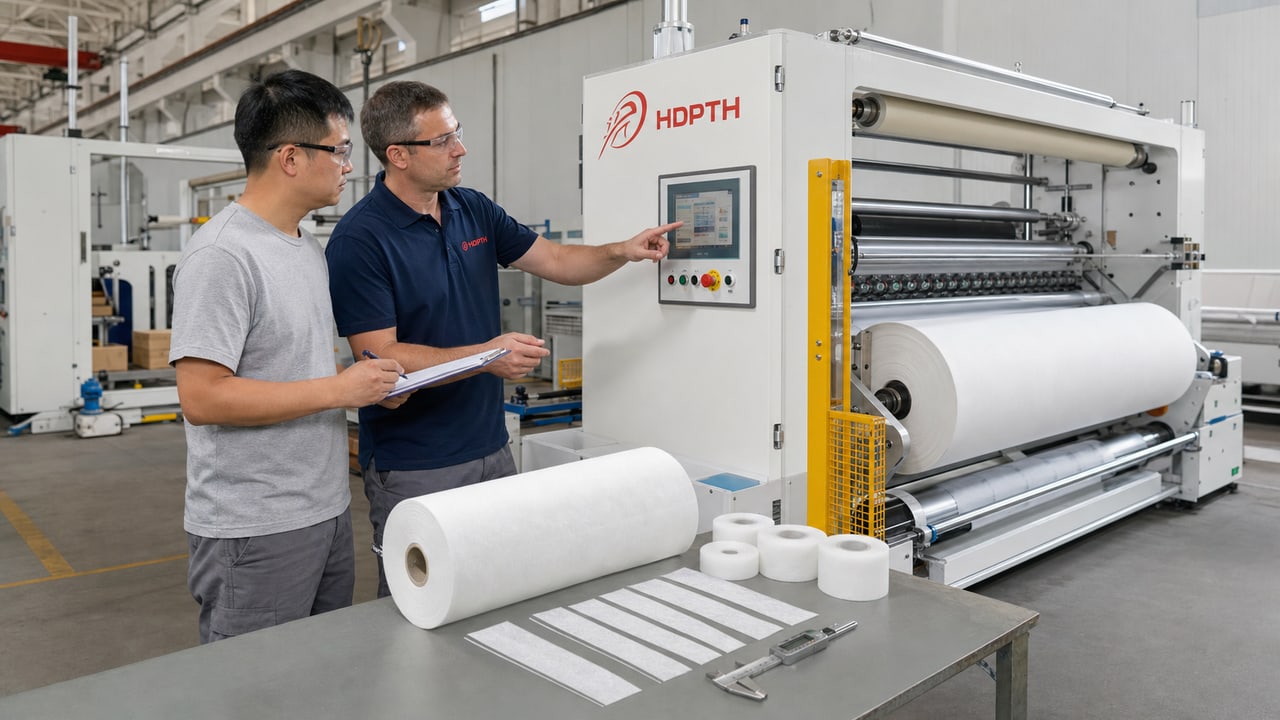
Why FAT matters before an overseas slitter rewinder shipment
Sourcing capital equipment internationally involves practical logistical risk. Once a machine leaves the factory and crosses the ocean, structural modifications or electrical corrections can become more difficult. A FAT gives buyers an opportunity to compare the physical build and demonstrated operation with the agreed specification while the equipment is still at the supplier's facility.
For overseas buyers, a clear FAT protocol is a useful risk-management tool. Buyers should establish what the chosen supplier's testing process includes because test scope varies. The review may range from configuration and dry-run checks to material-based trials, but availability and conditions should be agreed before order.
This planning applies to both high-speed slitting machine projects and nonwoven rewinding machine projects. The useful question is not whether the machine moves, but whether the recorded evidence matches the buyer's written criteria for configuration, operation and finished-roll requirements.
Define acceptance criteria before requesting quotations
Acceptance criteria should begin at the RFQ stage rather than after the machine has been built. Early criteria help purchasing and engineering teams compare proposals on the same basis and clarify which test conditions a prospective supplier can support.
Buyers should separate design specifications from acceptance evidence. A quotation may state working width, roll diameter or control functions, while the FAT plan should state how the buyer expects each relevant item to be checked and recorded.
A structured criteria document can cover:
- Ordered working width, unwind and rewind structure, knife arrangement and agreed options
- Startup, acceleration, steady running, deceleration and stop conditions
- Slit-width, edge-quality and finished-roll observations
- Web tracking, tension response and roll profile requirements
- HMI functions, alarms, requested guarding, interlocks and emergency stops
- Documents, spare-parts scope, packing records and installation data
What to send a supplier before FAT
The groundwork for a productive FAT is laid before machinery is built. A detailed RFQ gives the supplier the context needed to discuss a suitable configuration and allows the buyer to define realistic test conditions. Serious inquiries should describe the actual production parameters rather than relying on a machine name alone.
- Material properties: material type, GSM or thickness, surface condition and any known elasticity or edge sensitivity.
- Parent-roll data: width, maximum diameter, core size and expected roll weight where relevant.
- Finished-roll target: slit-width plan, rewind diameter, core dimensions and downstream application.
- Operational target: required production speed and the condition under which it should be evaluated.
- Facility constraints: destination country, electrical supply and compressed-air availability where required.
- Project context: measurable acceptance criteria and current production issues such as web wandering, telescoping or web breaks.
Practical slitter rewinder FAT checklist
A structured review helps buyers or their designated representatives compare the machine with the agreed documents. Confirm with the supplier in advance which conditions, such as dry runs or sample-material trials, will be available.
Evidence should identify the exact condition being observed. A useful record states the material or dry-run condition, parent-roll details where applicable, slit-width arrangement, operating speed and the relevant HMI setting. This context prevents a short demonstration from being interpreted as proof of a different production requirement.
Photographs and video should focus on decision points rather than general workshop views. Component data plates, the web path, knife section, roll faces, control screens and safety-function checks provide more useful evidence than a single uninterrupted machine overview.
| Inspection area | What the buyer should verify | Evidence to record |
|---|---|---|
| Ordered configuration | Compare installed components and machine structure with the agreed specification. | Overall photographs and relevant component data plates. |
| Running sequence | Observe startup, acceleration, steady running, deceleration and stop behavior at the agreed condition. | Video plus recorded material and operating conditions. |
| Slit quality | Review edge cleanliness, width results and knife operation against written criteria. | Close-up photographs and measured samples where available. |
| Rewind quality | Inspect finished-roll alignment, firmness and visible telescoping or side-face issues. | Roll measurements and photographs of finished roll faces. |
| Web handling | Observe tracking and tension response during agreed speed changes. | HMI readings and video of the web path. |
| HMI and alarms | Check interface response, relevant settings and agreed alarm functions. | Screenshots of menus and alarm records. |
| Safety functions | Check requested guards, interlocks and emergency-stop response. | Signed checklist and test evidence. |
| Documents and packing | Review manuals, electrical information, spare-parts scope and packing plan. | Document list and pre-packing photographs. |
What to write into the FAT sign-off sheet
The sign-off sheet should reflect the real test, beginning with the material and operating conditions. If the review was a dry run or used a substitute material, record that limitation clearly.
List the agreed pass or fail criteria beside the observed results. Avoid broad statements such as "machine runs well." Record the condition demonstrated, relevant measurements, roll observations and any difference from the ordered specification.
Open items should become a punch list with a responsible party, required action and completion status. The document should also state whether shipment is released, released subject to documented minor items, or held pending correction and review.
The sign-off sheet should reference the configuration documents used during inspection. This makes it easier for purchasing, engineering and plant management to understand whether an observation relates to the base machine, an ordered option or a later change. Attach or reference supporting evidence so each decision can be traced to a photograph, video, measurement or document.
Discuss the machine configuration before the test plan
Send your material, roll dimensions, slit-width plan, target speed and utility requirements. HDPTH can use this project data to discuss a suitable slitting or rewinding machine configuration.
Send Project DataWhat should trigger a hold before shipment
A buyer may need to pause shipment when the installed configuration differs from the ordered specification, an agreed safety function remains unresolved, or the machine is unstable at the mutually agreed test condition.
A hold may also be appropriate when slit or rewind results fall outside written criteria, critical documentation is incomplete, or a punch-list item affects installation or normal operation. The reason, evidence and required correction should be recorded rather than left as a verbal understanding.
Not every minor observation requires the same response. Buyers can distinguish cosmetic or documentation corrections from issues that affect operation, safety, installation or the agreed product result. The release decision should follow that written classification rather than the pressure of an approaching shipping date.
FAT versus SAT and installation preparation
FAT takes place before shipment at the supplier's facility. Site Acceptance Testing takes place after delivery and installation at the buyer's plant. FAT focuses on the ordered build and available factory test conditions; SAT checks operation after transport and connection to the buyer's actual utilities and production environment.
Installation planning should cover floor space and service clearance, electrical supply, compressed air where required, lifting and roll-handling equipment, production material, assigned operators and a review of applicable local safety requirements. HDPTH's factory page states a 6,000 m2 manufacturing base, while final project requirements should always be confirmed against the ordered machine documents.
Plant teams should also decide who will receive the machine, verify packing contents, supervise positioning and retain the FAT evidence for comparison during SAT. Preparing operators and suitable material before commissioning helps the site team separate installation questions from process-setting questions.
Buyer FAQs
What data should I send before requesting a slitter rewinder quotation?
Buyers should provide material type, GSM or thickness, parent roll dimensions, finished slit widths, target speed, finished roll requirements, available utilities and the destination country. This data helps the supplier understand the baseline configuration requirements.
Can FAT be prepared around my material sample?
This depends on the chosen supplier. Buyers should confirm during the quotation stage whether sample-material testing is available and what roll size, quantity and delivery timing would be required.
What should be resolved before shipment release?
Buyers should verify that configuration mismatches are corrected, agreed safety functions operate as intended, critical documents are complete and punch-list items affecting installation or operation are resolved.
Do I need to attend a Factory Acceptance Test in person?
In-person attendance provides direct oversight, but buyers may also discuss remote evidence or a qualified third-party inspection with the chosen supplier. The inspection scope and required records should be agreed in advance.
What should be written into the FAT sign-off sheet?
The sign-off sheet should record the material and test conditions, agreed pass or fail criteria, observed results, ownership of punch-list items and the shipment-release status.
Sources
These are general machinery safety and acceptance-testing references. Buyers should confirm the requirements that apply in their destination market and facility.
- ISO 12100:2010 - Safety of machinery: risk assessment and risk reduction
- IEC 60204-1:2016 - Electrical equipment of machines
- IEC 62381:2024 - FAT, SAT and SIT requirements and checklists
- OSHA 1910.212 - General requirements for all machines
- OSHA 1910.147 - Control of hazardous energy
Discuss your slitter rewinder configuration with HDPTH
For a focused technical discussion, send your material details, parent-roll dimensions, slit-width plan, target speed, finished-roll requirements, core sizes, available utilities and destination country. HDPTH manufactures nonwoven, paper and flexible roll-material converting machinery, including slitting machines, rewinding machines and automatic knife systems.
Request a Configuration Discussion