Published June 25, 2026 | By HDPTH Technical Editorial Team
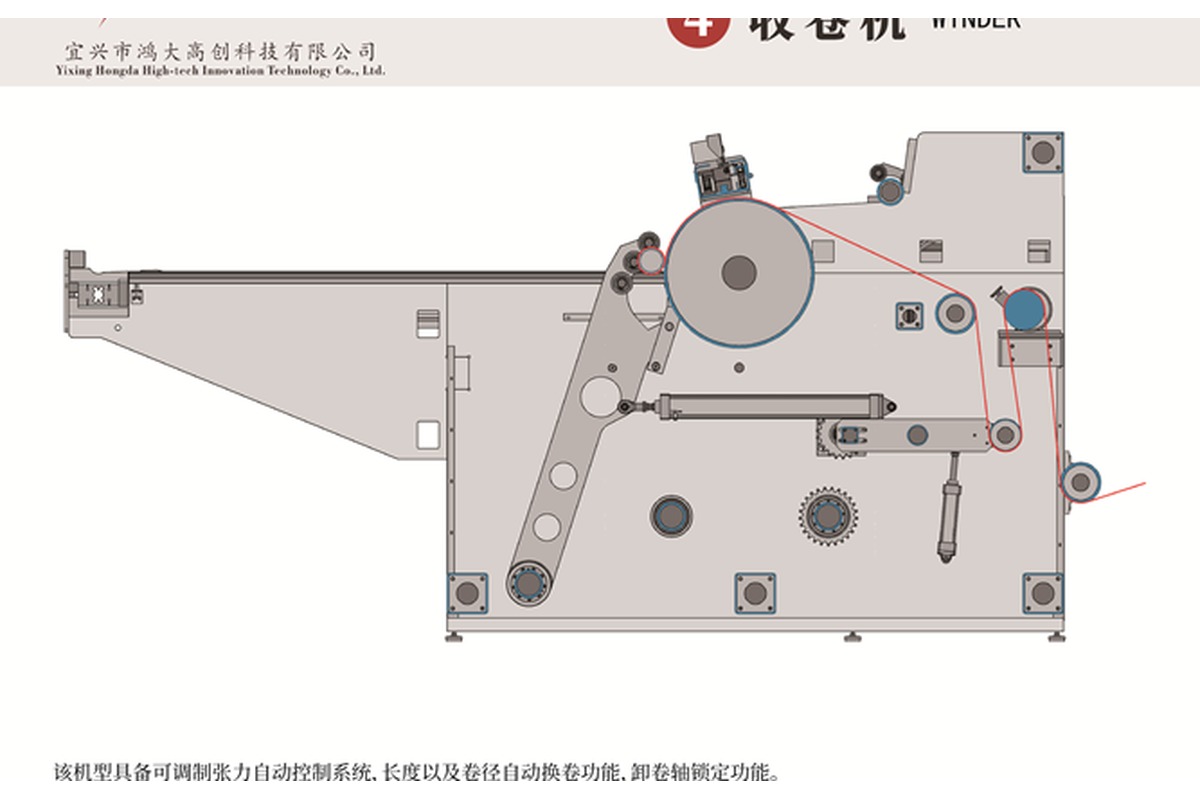
Many slitter rewinder inquiries focus on web width, maximum speed and the number of finished rolls. Those numbers matter, but they do not fully describe how the finished roll will be built. If the roll is too loose, too hard, marked, wrinkled, telescoped or unstable after storage, the problem may sit in the winding recipe rather than the slitting section alone.
Lay-on roller control is one of the topics buyers often discover late. The quotation may mention a pressure roller, contact roller, rider roll, lay-on roller or nip roller, but those words are not enough. The practical question is whether the contact method and control range match the material and roll quality target.
This guide explains the buying decision in plain terms for overseas plant managers, production engineers and procurement teams evaluating nonwoven, paper, PE/PET film and other flexible roll-material converting lines.
What a lay-on roller does
A lay-on roller is positioned against, or very close to, the winding roll. Depending on the machine design and product requirement, it can apply controlled pressure or maintain a controlled gap near the roll surface. In everyday factory language, buyers may also hear it called a contact roller, pressure roller, nip roller or rider roll.
The purpose is not simply to press harder. Contact near the winding roll can help control air entrainment, roll hardness, roll face stability and layer-to-layer behavior. For some webs, especially in surface or center-surface winding, nip is one of the main variables used to form the roll. For other materials, too much contact can create marks or roll blocking.
That balance is why a buyer should treat lay-on roller control as a specification topic, not a small accessory question.
Nip pressure is part of a winding system
Winding quality is usually discussed through three interacting variables: tension, nip and torque. Valmet's winding principle articles describe how web tension, rider roll pressure and torque ratio all influence roll hardness, with the relationship depending on the winder type and process condition. TAPPI technical material on flexible packaging winding also describes center winding, surface winding and center-surface winding as different ways to use those variables.
For buyers, the lesson is direct: do not evaluate nip pressure in isolation. A finished roll can be affected by unwind stability, web guiding, slitting method, differential winding, core quality, winding torque, lay-on pressure and operator setup. If one variable is used to compensate for a problem elsewhere, the roll may pass a short demonstration and fail in production.
HDPTH's nonwoven rewinding machines page describes rewinding equipment for stable tension, consistent roll formation and custom production layouts. That is the correct context for this topic: lay-on roller control should support the complete roll-building requirement.
When buyers should discuss lay-on roller control
Not every project needs an advanced lay-on system. A plant running stable materials at moderate roll diameters may only need a straightforward, well-built winding section. But several conditions make the discussion important before quotation.
- Finished rolls show telescoping, starring, soft edges or inconsistent hardness.
- The web traps air between layers at higher speed or larger roll diameter.
- The material is thin, soft, stretchy, tacky or sensitive to compression.
- The line processes multiple materials with different winding behavior.
- Finished rolls must feed downstream converting, packaging, printing or lamination with limited variation.
- The buyer wants a documented winding recipe for repeated orders or multi-shift production.
- Existing operators adjust pressure by feel and results vary by shift.
These are purchasing signals. They influence machine layout, control design, commissioning procedure and FAT acceptance, not only operator training after installation.
Material behavior decides whether contact helps or hurts
A lay-on roller can improve roll control for one web and damage another. Soft nonwoven materials may need stable roll formation without crushing loft or creating face marks. PE or tacky films may react to air entrainment, blocking or gauge bands. Paper may need stable roll hardness and clean roll faces. Laminates may combine several behaviors in one structure.
Parkinson Technologies has written about linearly acting lay-on rollers and the need for predictable nip force control. Their guidance is useful because it frames nip as a controlled process variable rather than a simple mechanical add-on. Predictability matters when plants change width, material or roll diameter frequently.
For HDPTH buyers, the safe approach is to describe the product and the unacceptable defects. A supplier can then discuss whether the project needs a contact roller, a controlled gap, pressure adjustment, winding recipe control, different shaft choice or a different winding method.
Useful RFQ data for nip pressure review
A supplier cannot responsibly recommend lay-on roller details from "nonwoven roll" or "film roll" alone. Send enough information to describe how the roll must behave in production and downstream use.
| RFQ Item | Why It Matters | What to Send |
|---|---|---|
| Material | Compression, stretch, friction and tack affect nip response | Nonwoven type, paper grade, PE/PET film, laminate, GSM or thickness |
| Finished roll size | Nip effect changes as roll diameter grows | Core ID, core length, target OD and roll weight if known |
| Finished widths | Narrow lanes may need different roll support than wide rolls | Lane layout, trim allowance and minimum slit width |
| Speed target | Air entrainment and instability often increase with speed | Target stable speed and acceptable startup speed |
| Current defects | Defect description points to the process variable to test | Photos of telescoping, starring, soft rolls, marking, wrinkles or blocking |
| Downstream process | Roll quality requirement depends on what happens next | Packaging, printing, laminating, folding, converting or storage |
| Contact sensitivity | Some surfaces cannot tolerate pressure marks | Whether marks, gloss change, crush or imprint are unacceptable |
How nip pressure connects with winding method
A center winder primarily drives the roll through the core. A surface winder drives the roll through surface contact. A center-surface arrangement can combine effects. Because the winding method changes how torque, tension and nip are used, the same pressure setting does not mean the same thing across machines.
HDPTH has a separate article on center winding versus surface winding on a slitter rewinder. Buyers should read the two topics together. Winding method is the architecture; lay-on or nip control is one of the working variables inside that architecture.
If a buyer is unsure, the RFQ should describe the finished roll expectation rather than selecting a winding method prematurely. The supplier can then recommend a configuration and explain how nip will be controlled or limited.
Do not overuse pressure to hide other problems
More pressure may make a roll feel firmer, but that does not automatically mean the roll is better. Excessive nip can mark sensitive materials, force gauge variation into the roll, create hard bands, crush cores, increase blocking risk, or make unwinding difficult for the next process.
Too little contact can also be a problem. It may allow air to enter between layers, reduce roll stability, create loose edges or allow telescoping during handling. The correct target is a controlled roll structure, not the highest pressure the machine can apply.
This is also why the buyer should not compare proposals by asking which machine has the "stronger" pressure roller. The better question is how pressure is applied, adjusted, repeated, monitored and tested with the real material.
Need help deciding whether lay-on control belongs in your RFQ?
Send HDPTH your material, finished roll dimensions, current roll defects, speed target and downstream process. The review can focus on whether contact, gap, winding method or shaft selection is the main issue.
Request Rewinding Configuration ReviewFAT checks for lay-on roller and nip settings
Factory acceptance testing should prove more than machine motion. It should show whether the winding recipe can produce acceptable rolls under agreed conditions. If the buyer supplies production material, the test is stronger. If a substitute material is used, that limitation should be written into the FAT record.
During the FAT, record the material, web width, finished width, core ID, roll diameter, speed, tension setting, lay-on or nip setting and any operator adjustment. Inspect the roll face, edges, hardness trend, wrinkles, telescoping risk, trapped air, core condition and surface marking. If rolls will be stored or shipped before use, check whether the roll remains stable after handling.
For safety, contact and nip points must also be reviewed as machine hazards. OSHA's machine guarding rule for general industry requires guarding of machine parts and points of operation where they expose operators to injury. Buyers should confirm guarding, emergency stop access, lockout procedure and operator training needs during layout and FAT discussion.
Supplier-evaluation questions
The following questions help separate a real engineering discussion from a generic accessory list.
- How does the proposed machine control or adjust lay-on contact?
- Can the setting be repeated as part of a recipe or operating procedure?
- What material defects would indicate too much or too little nip?
- How will nip be tested during FAT and later adjusted during commissioning?
- Does the proposal consider core quality, finished roll diameter and downstream unwinding?
- What guards and operator access controls apply around the contact area?
- Which roll-quality checks will be recorded before shipment?
HDPTH's certificates and patents page lists patent documents covering slitting, rewinding, unwinding, edge trim recovery, automatic knife adjustment and related converting technologies, including an adjustable pressure roll cylinder control device for rewinding machine. Use those documents as supplier-background evidence, while still asking project-specific questions for your own material and roll target.
Installation and commissioning preparation
Lay-on roller performance depends on the machine and the factory environment. Before installation, confirm floor levelness, compressed air stability where pneumatic control is used, power supply, roll handling path, safe access, and space for removing finished rolls without impact damage. A roll that leaves the winder correctly can still be damaged by poor unloading or storage.
During commissioning, operators should be trained to change one variable at a time. If tension, speed and pressure are all changed together, the team may not know what solved or caused the defect. Keep recipe notes for each material and finished roll size, especially when the plant processes several SKUs.
Practical buyer checklist
Before asking for a quotation, prepare a short winding-quality sheet. It should include:
- Material type, GSM or thickness, surface sensitivity and friction concerns.
- Parent roll width, finished widths, trim allowance and target roll diameter.
- Core ID, core material, core length and core quality requirements.
- Target speed and the speed at which defects currently appear.
- Photos or video of roll defects, if replacing or upgrading an existing line.
- Whether the roll feeds downstream converting immediately or goes into storage.
- Any requirement for recipe repeatability, operator access control or production records.
- FAT material availability and the roll-quality checks that must pass before shipment.
Buyer FAQs
What does a lay-on roller do on a slitter rewinder?
A lay-on roller applies controlled contact to the winding roll or runs at a controlled gap near the roll surface. It helps manage air entrainment, roll hardness, roll face stability and winding consistency when the material and roll package require it.
Is more nip pressure always better for roll quality?
No. Too little contact can allow loose rolls, air entrainment or telescoping, but too much pressure can mark sensitive materials, create hard rolls, amplify gauge bands or crush cores. The correct setting depends on the web, winding method, speed, roll diameter and downstream requirement.
When should buyers specify lay-on roller or nip pressure control?
Buyers should discuss it when finished rolls show telescoping, starring, blocking, loose edges, trapped air, poor roll face quality, or inconsistent hardness, and when the material is thin, soft, stretchy, tacky or sensitive to pressure.
What RFQ information is needed for nip pressure review?
Send material type, GSM or thickness, web width, finished widths, core ID, finished roll diameter, target speed, winding method, roll-quality defects, downstream process and whether the product can tolerate contact pressure.
How should nip pressure be checked during FAT?
During FAT, run the agreed material or a documented substitute, record the lay-on or nip settings, inspect roll hardness trend, roll face, edge condition, telescoping risk, wrinkles and material marking, then keep the accepted recipe with the shipment record.
Sources
- Valmet: Winding principles part 1, effect of web tension
- Valmet: Winding principles part 2, effect and elements of nip pressure
- TAPPI PLACE paper: Challenges in Winding Flexible Packaging Film
- Parkinson Technologies: Linearly-acting Lay-on Roller
- OSHA 29 CFR 1910.212: Machine guarding
Ready to discuss roll quality before ordering a slitter rewinder?
Share your material, winding defects, target roll size, core details and speed requirement with HDPTH. A clear inquiry helps align the lay-on roller, winding method and FAT checks with your production goal.
Send Your Rewinding RFQ